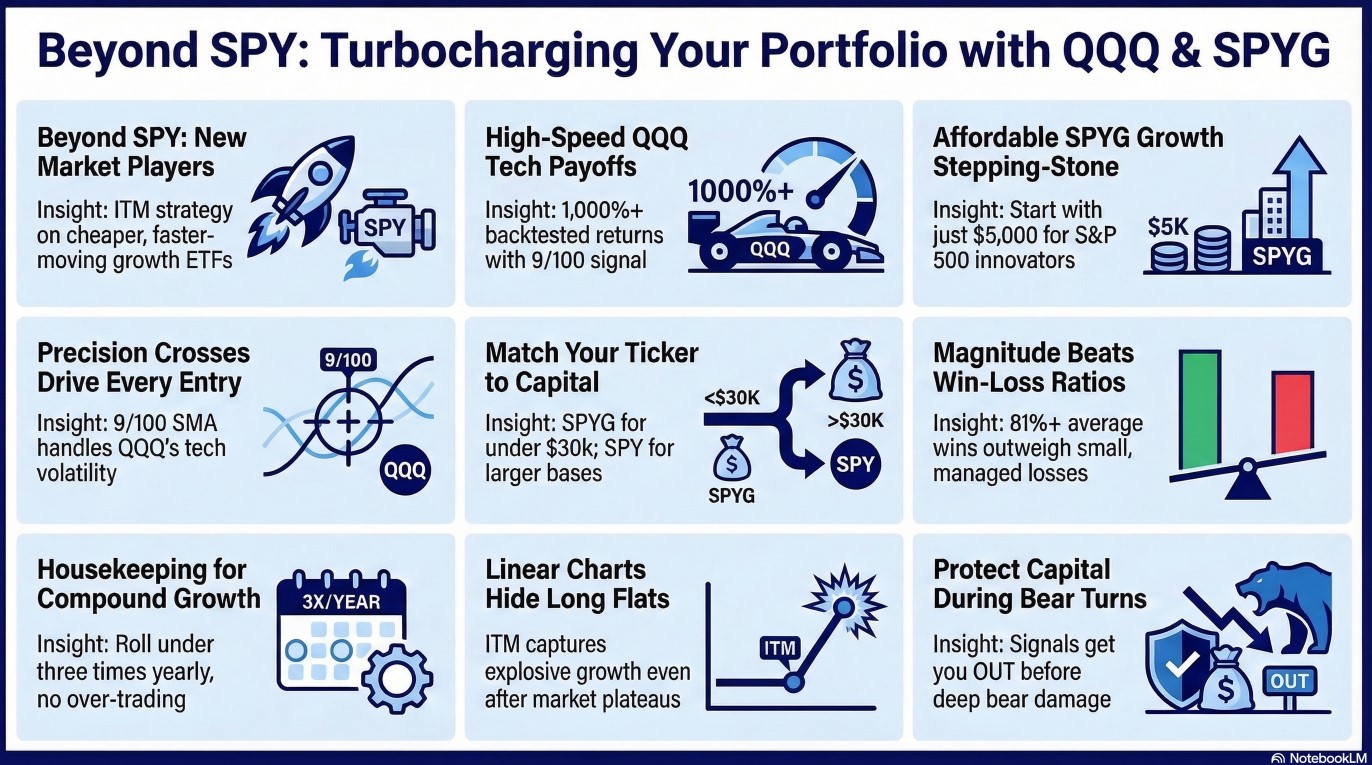
We’ve seen the impressive results from SPY – but SPY isn’t the only game in town. This chapter shows how The ITM Plan performs on other ETFs – SPYG and QQQ. If you want a cheaper entry, or a faster ride, here’s what it means for your results.
Ch 11 : Overview
Other Players: SPYG & QQQ
Ch 11 : Essentials in 14 Points
Other PLayers : SPYG & QQQ
Ch 11 : Podcast
Other PLayers: SPYG & QQQ
Ch 11 : Video
The Other Players : SPYG & QQQ
Ch 11 : Glossary
The Other Players : SPYG & QQQ
Grab your coffee Here is the glossary for Chapter 11. We are introducing a couple of new players to the ITM strategy, so let’s cut right to the chase.
Hockey Stick Chart: The shape of our long-term profit graphs, featuring a long flat handle that suddenly shoots straight up. It happens simply because we use linear graphs that plot actual dollar amounts rather than percentages.
Magnificent Seven: Apple, Microsoft, Alphabet (Google), Amazon, Nvidia, Meta, and Tesla. These massive tech behemoths carry so much weight that they disproportionately drag the entire market up or down with them.
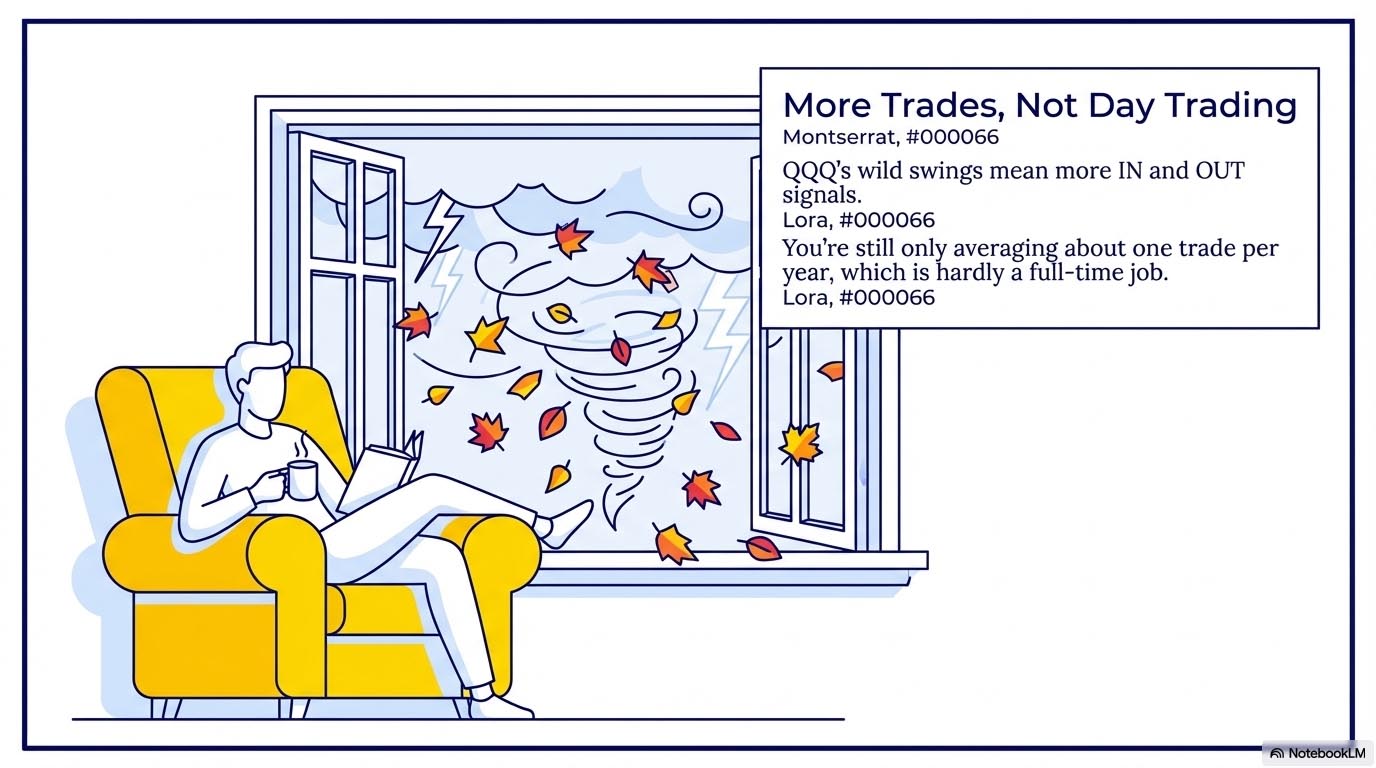
QQQ: An ETF that tracks the Nasdaq 100. It is basically a high-speed play on big tech. It is highly volatile and moves sharply, but the historical returns absolutely dwarf SPY.
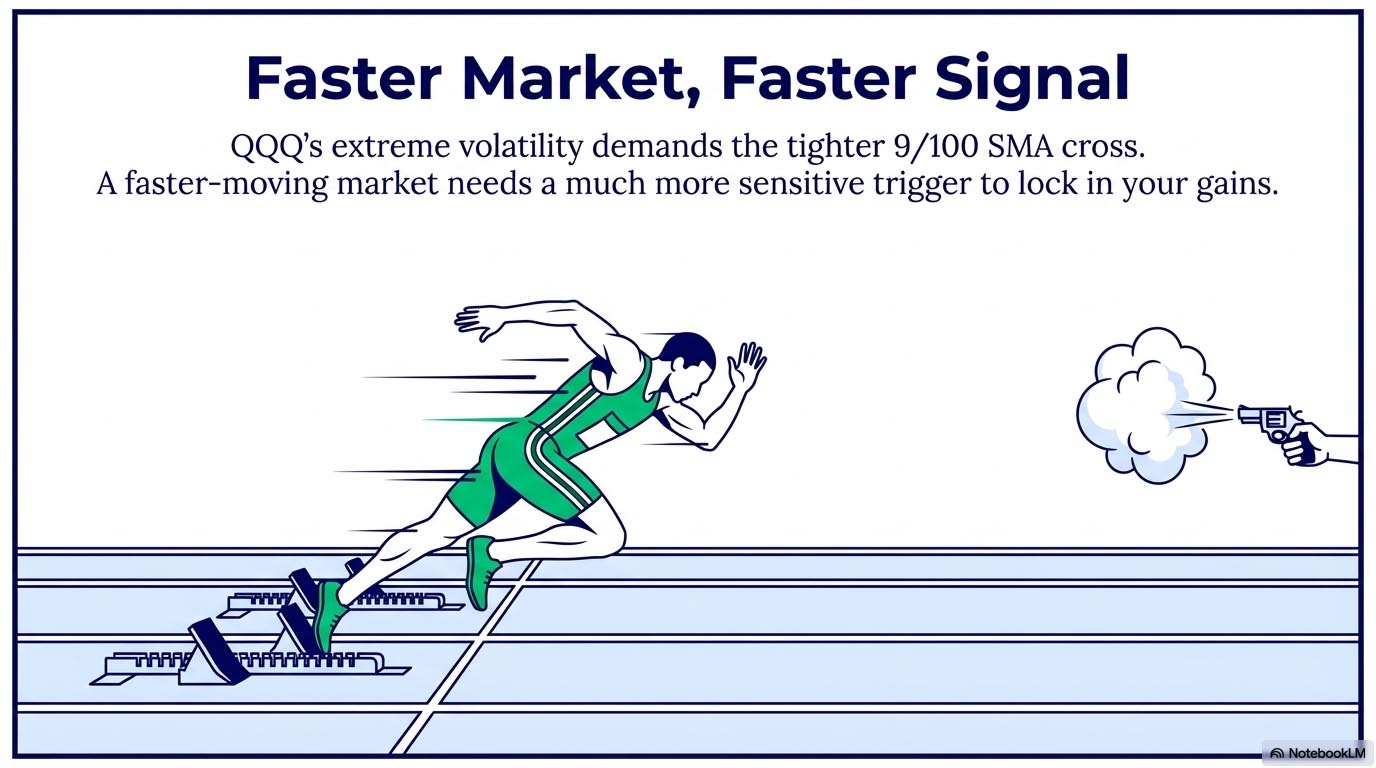
QQQ Signal (9/100 SMA): Because QQQ is so jumpy, our standard tracking is too slow. We use the 9-day and 100-day simple moving averages to generate faster IN and OUT signals, still requiring a 1.5% white gap to confirm.
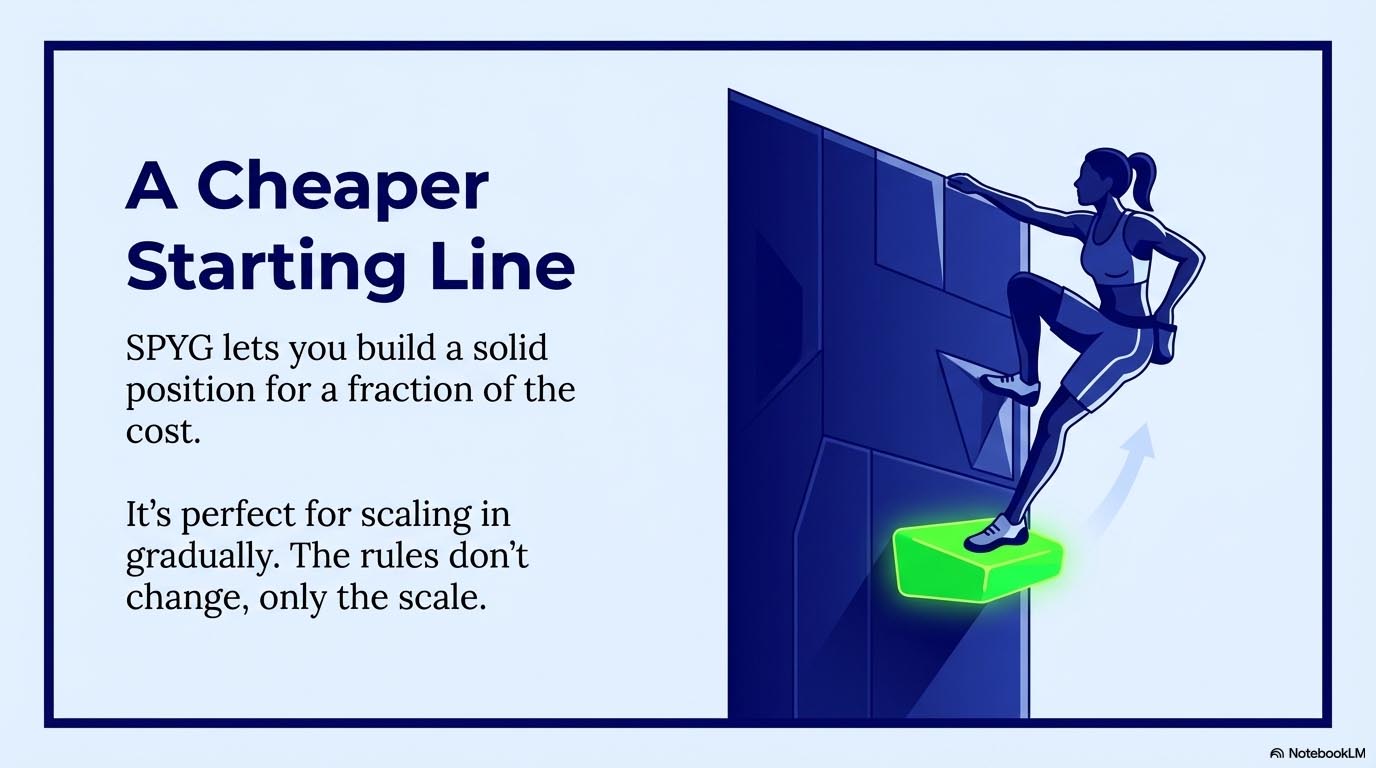
SPYG: The S&P 500 Growth ETF. Think of it as SPY’s younger, livelier sibling. It tracks the market’s innovators and disruptors, but shares cost a fraction of the price of SPY. It is the perfect stepping-stone if you are working with a smaller account.
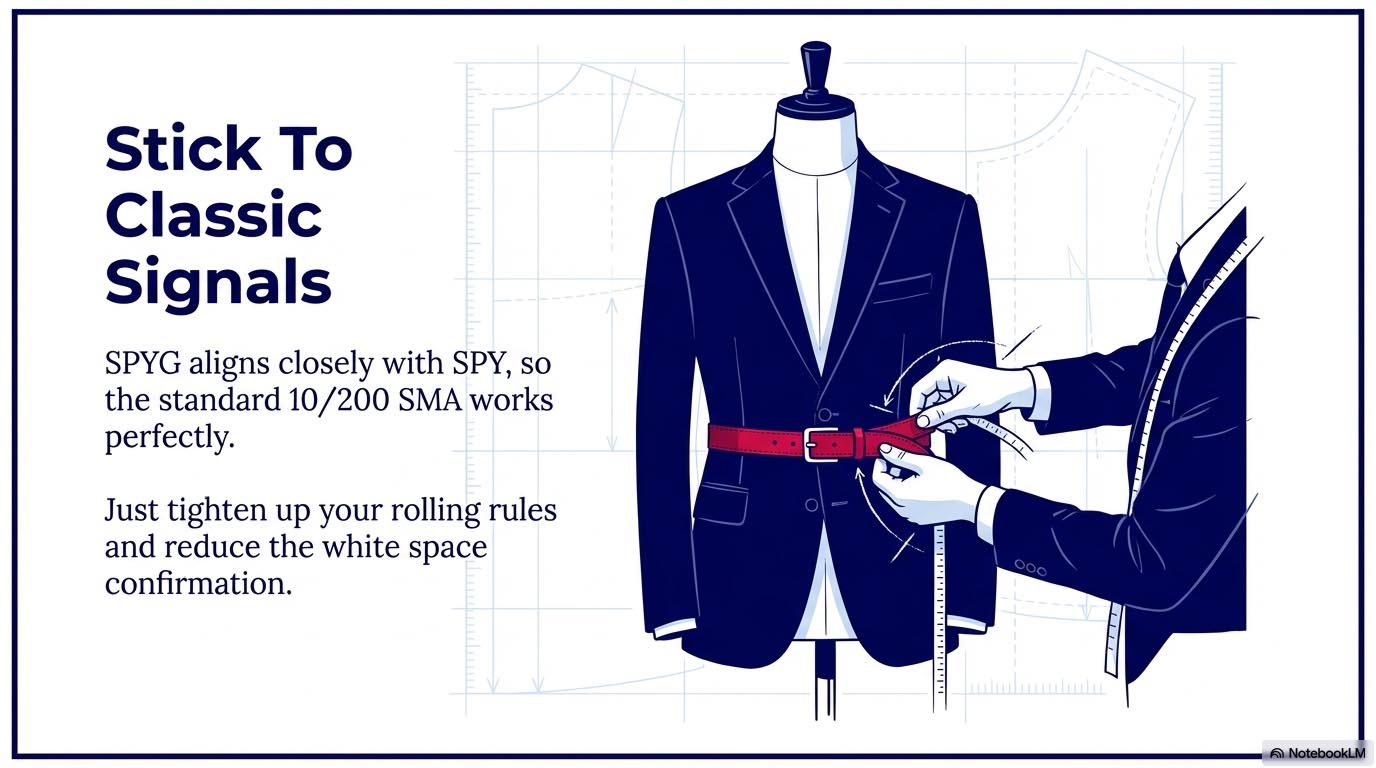
SPYG Signal (10/200 SMA with 1% gap): SPYG behaves a lot like SPY, so we stick to the classic 10-day and 200-day cross. We just tighten the required white space down to 1% to confirm the signal.
Yes, I know the essentials are repeated here - still trying to work out why that is. If I delete them here they are deleted everywhere. Sigh. Don't you just lurve technology???
Ready To Test Yourself?
Chapter 11 Quiz
Chapter 11 Quiz
QQQ & SPYG Strategy
Loading...
Quiz Complete!
You scored /
Thank you – your message has been sent.
You will be notified when there is a new blog post.
Please note that Heather answers all questions at the end of the ITM Blog.