Here is your Chapter 4 glossary. Let’s keep it simple, because people love to make this stuff sound complicated just to seem clever.
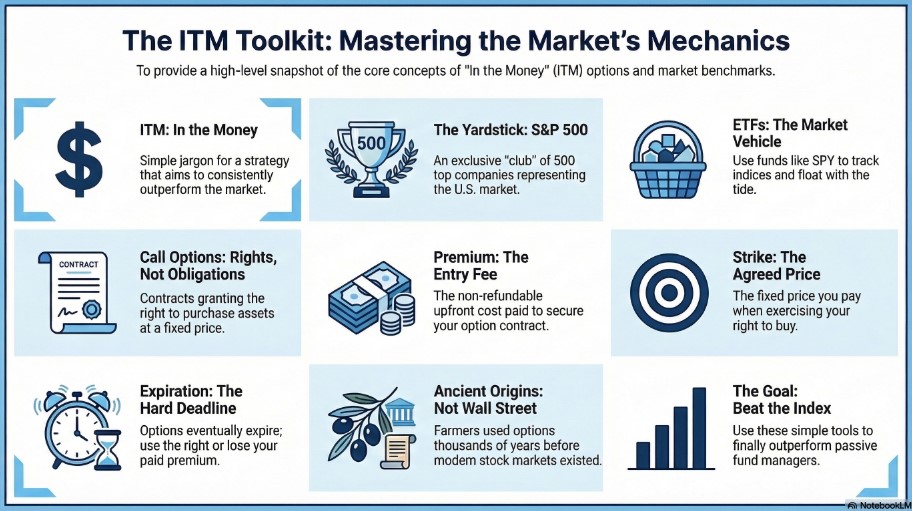
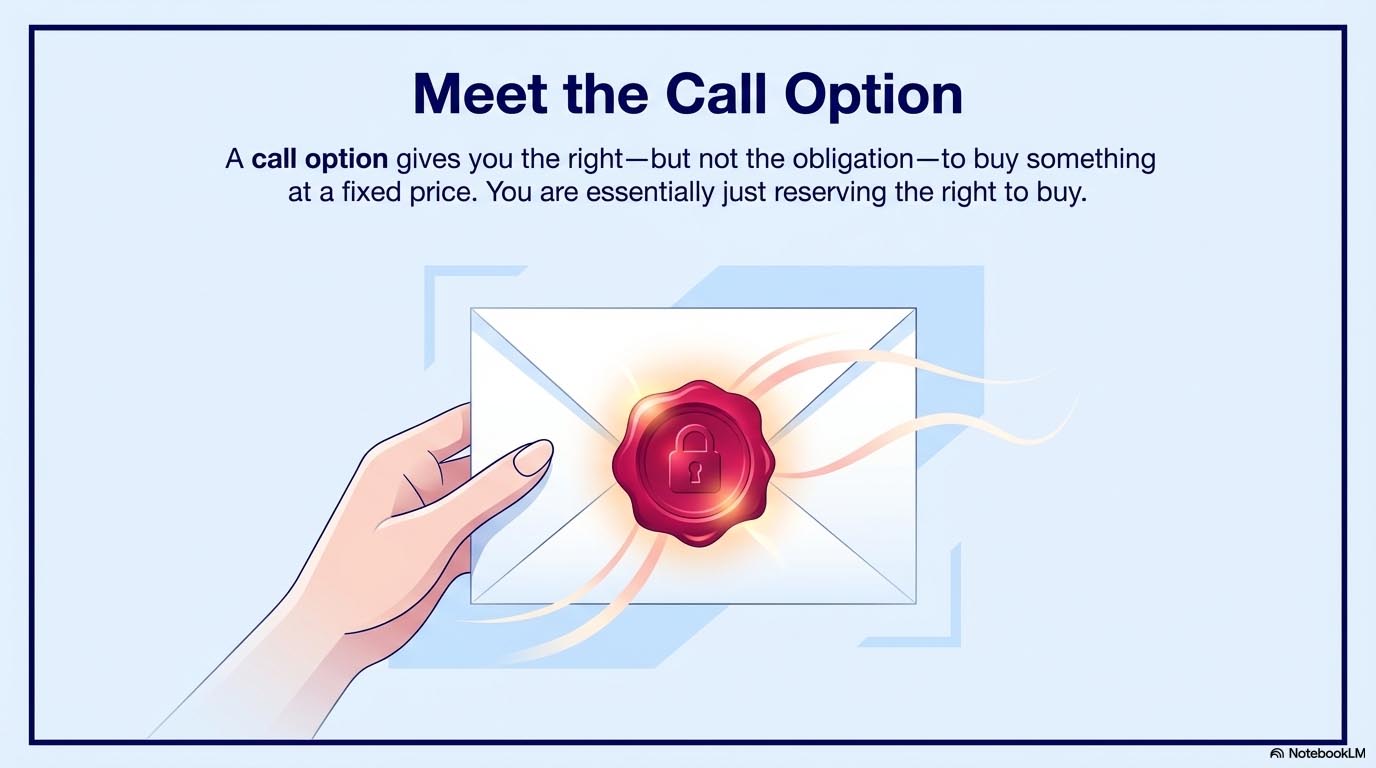
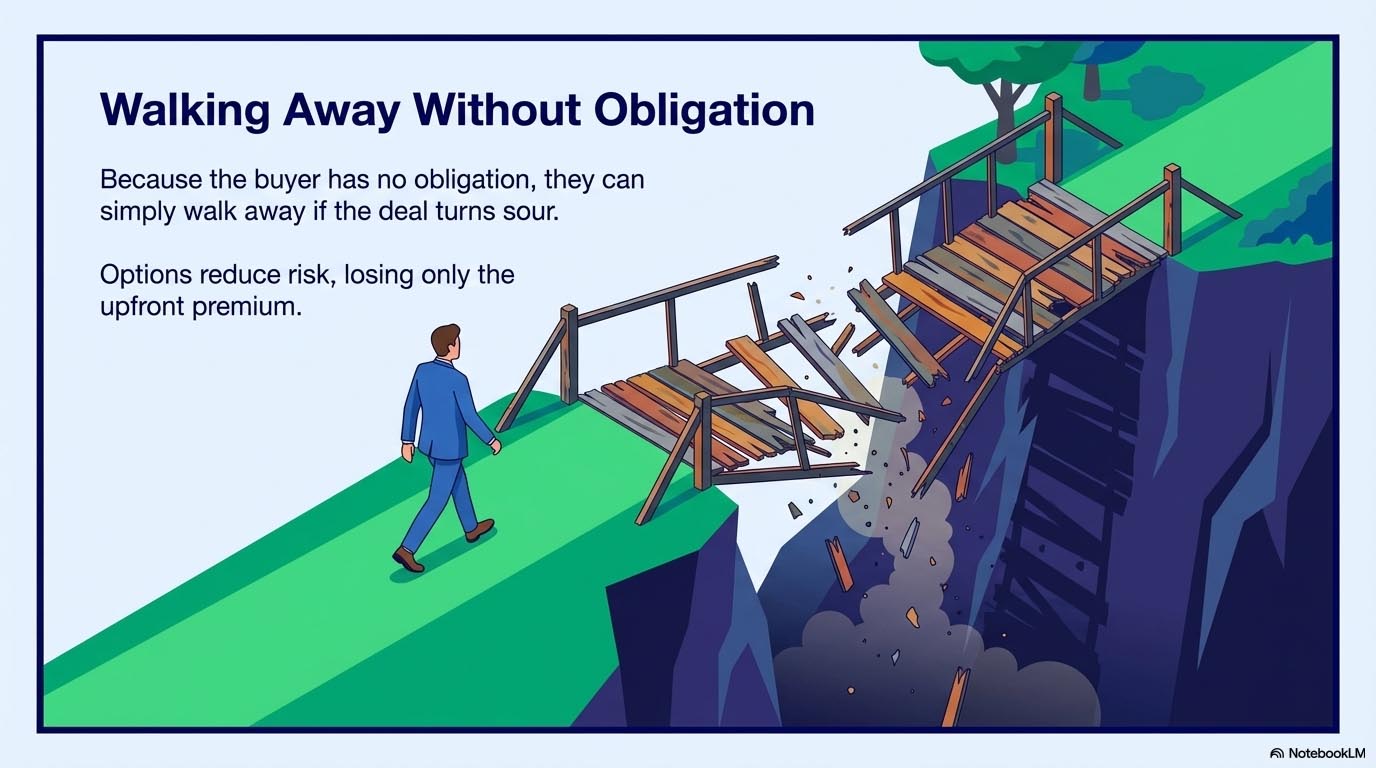
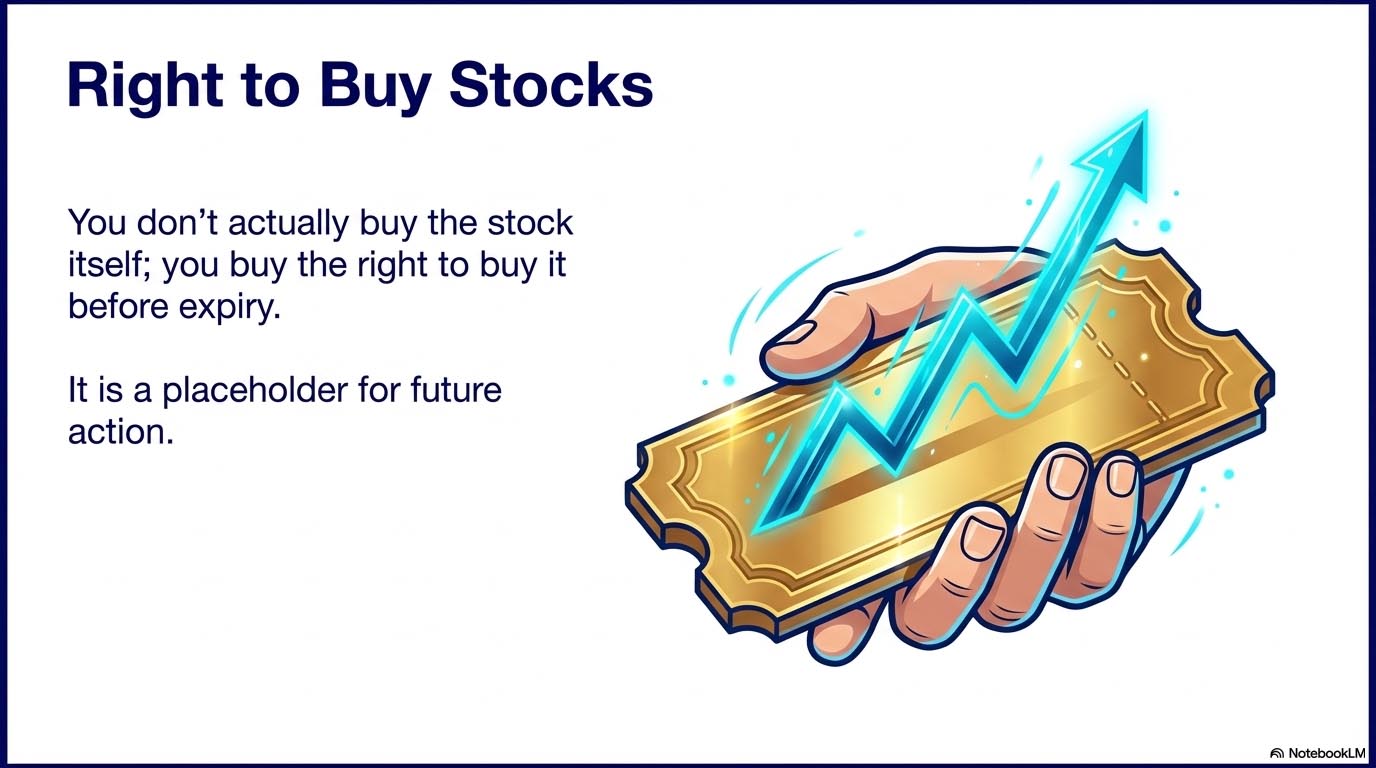
Call Option: A contract giving you the right to buy something at a fixed price before a specific date. You have no obligation to buy. You are simply reserving the right to “call” the asset away from someone.
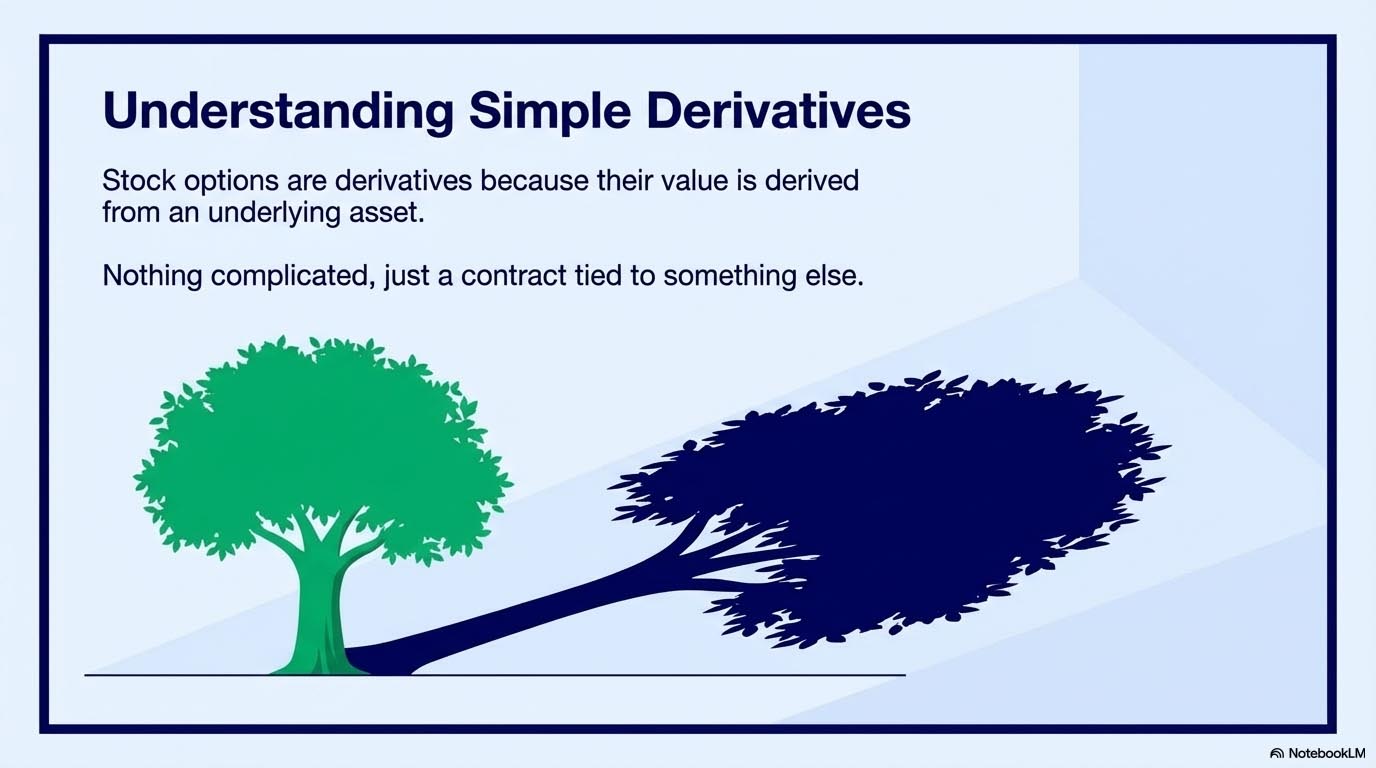
Derivative: A financial tool that derives its value from something else, like a house, a stock, or an ETF. Not as complicated as it sounds.
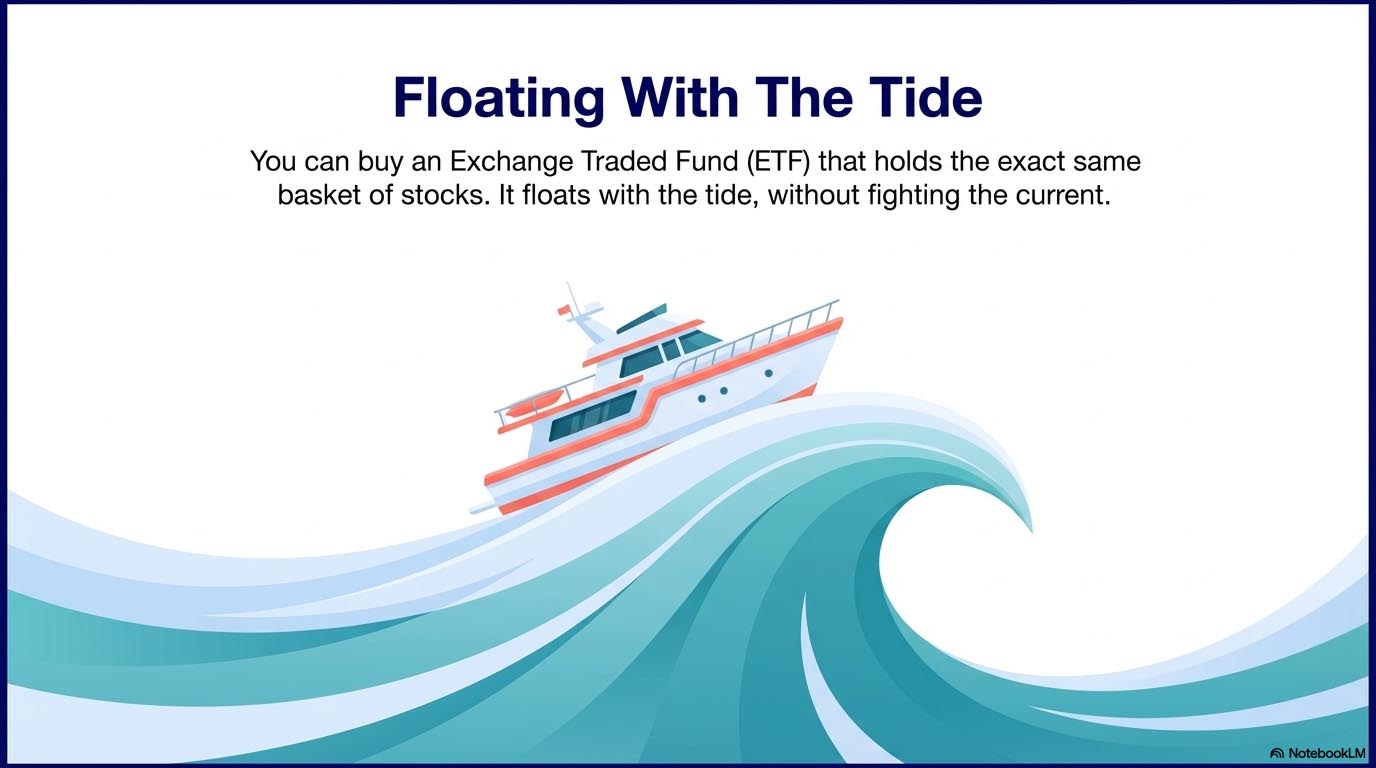
ETF (Exchange Traded Fund): A basket of stocks that perfectly tracks an index. You can’t invest directly in an index, so you buy an ETF to float with the market’s tide. Examples include SPY and QQQ.
Exercise: When the sale goes through and you actually use your option to buy the asset.
Expire: When you choose not to buy, and the clock simply runs out on the option contract.
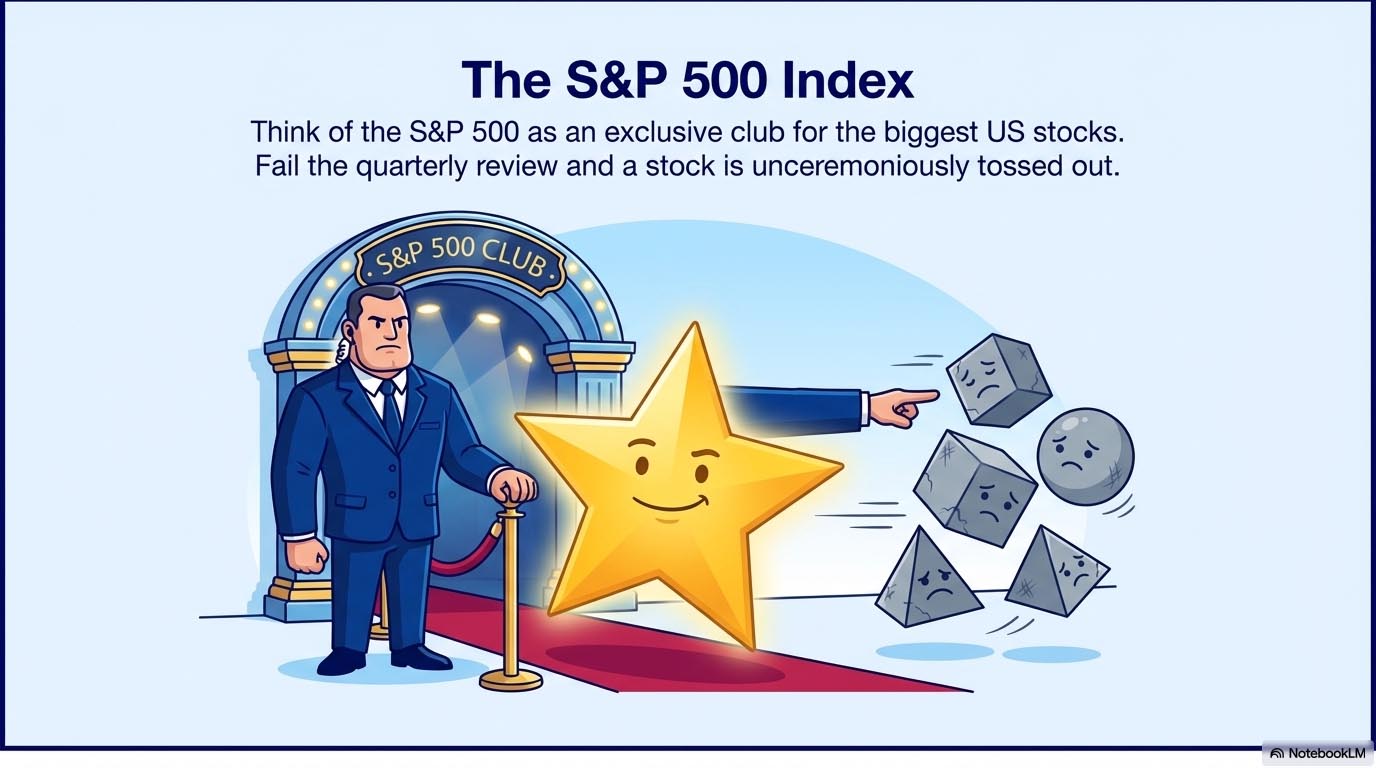
Index: An exclusive, invitation-only club for stocks. If a company fails its quarterly review, it gets tossed out. We use the S&P 500 (SPX) as our yardstick to beat.
ITM: Short for “in the money”. It is standard options jargon.
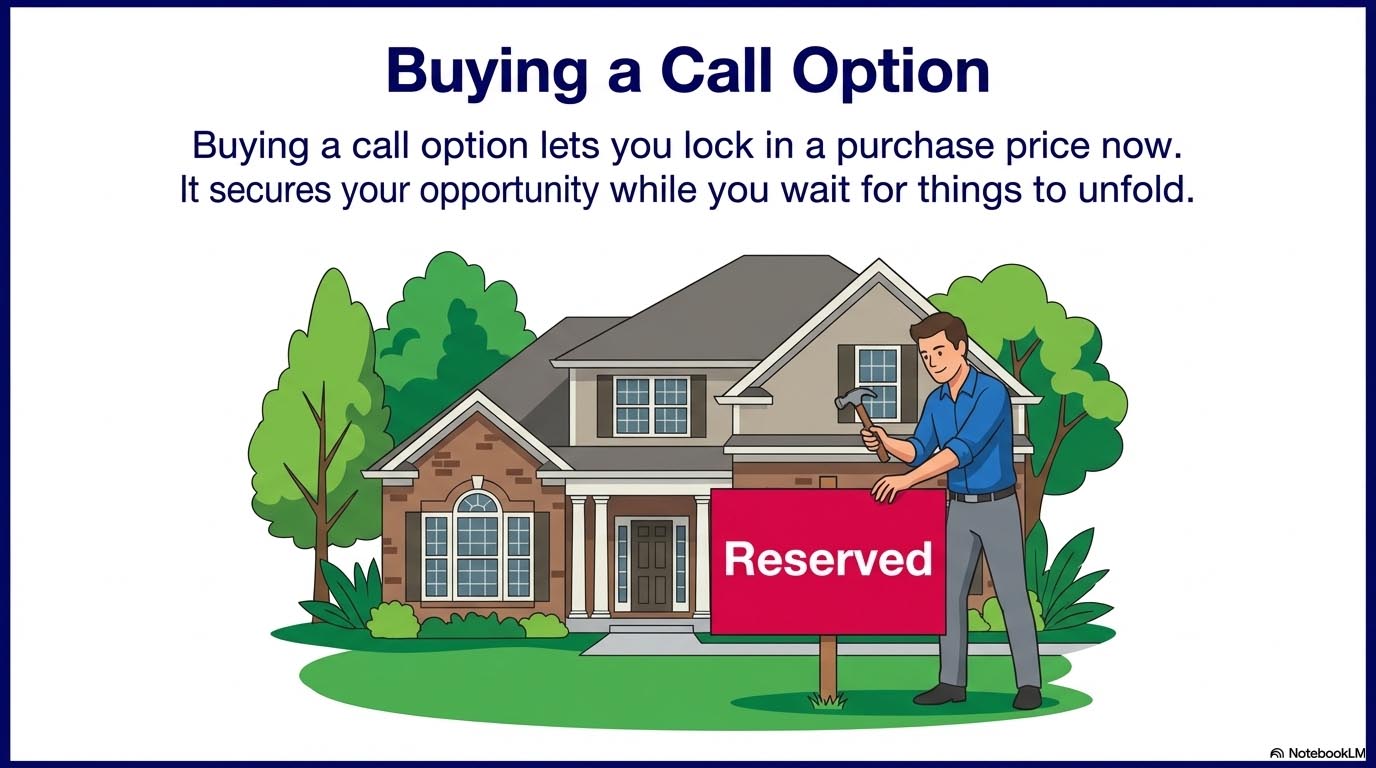
Option Buyer: The person who pays cash upfront to secure the right to buy or sell an asset later.
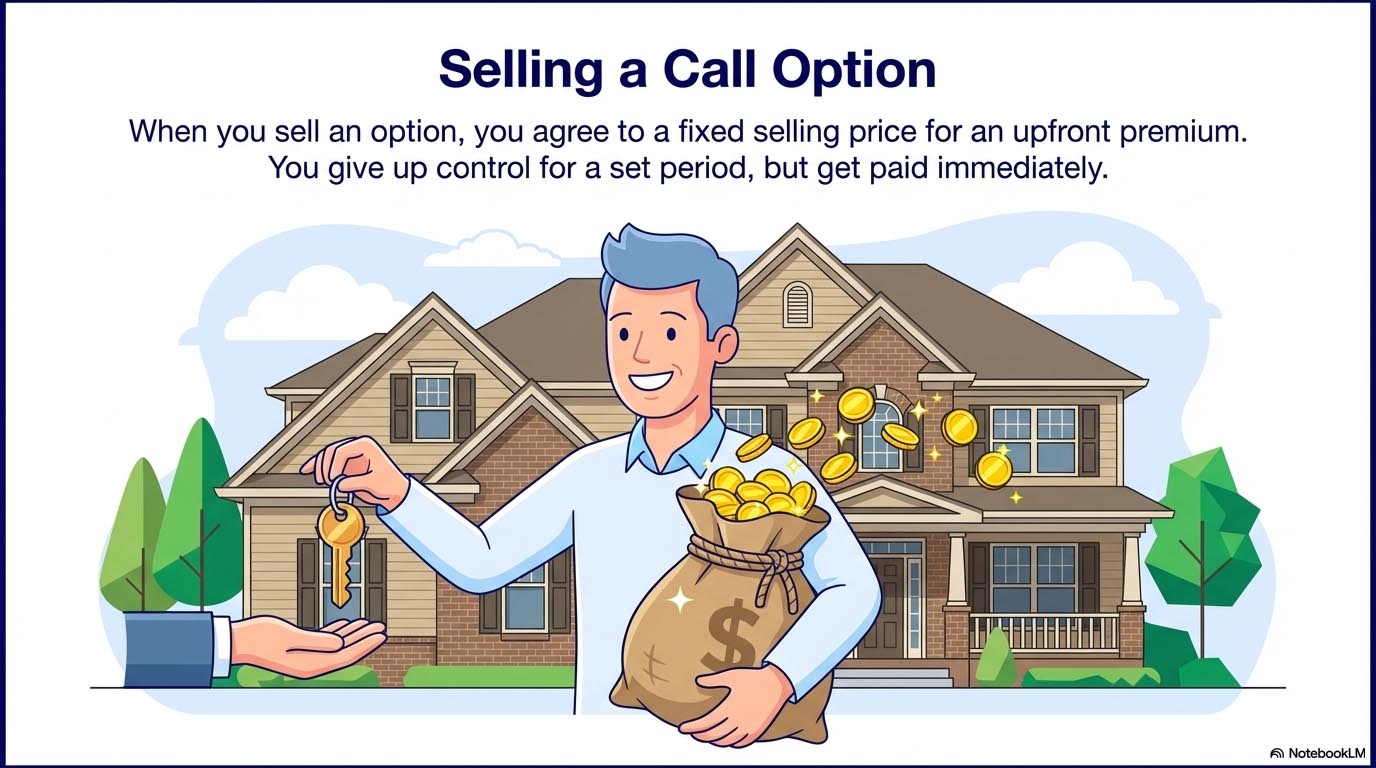
Option Seller: The person who collects the cash upfront in exchange for selling an option on their asset.
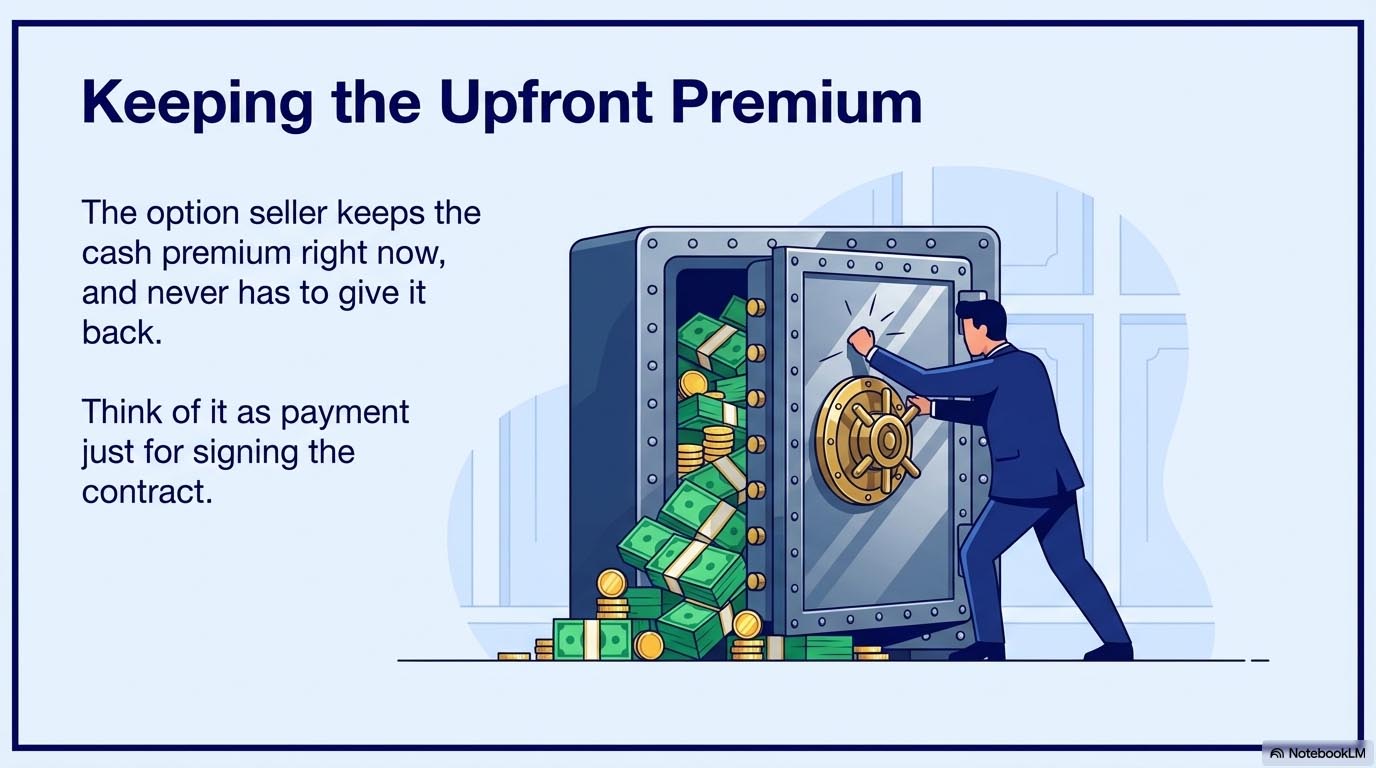
Premium: The upfront cash paid simply for signing the contract. The option seller keeps this money forever, whether the option is exercised or expires.
Put Option: A contract giving you the right to sell something to someone at an agreed price. Instead of calling it away, you are “putting” it to them.
Strike Price: The fixed, agreed-upon price you will pay for the asset if you exercise the option.
Time Period: The length of time the option is valid before it expires.