

Markets often look irrational, but there is a pattern beneath the chaos. This chapter explores how crowd behaviour, imitation, and simple incentives can produce the strange movements we see in markets every day. Before learning The ITM Plan, it helps to understand the currents that drive the market itself.






Here is a glossary of key terms and concepts defined or discussed in Chapter 2:
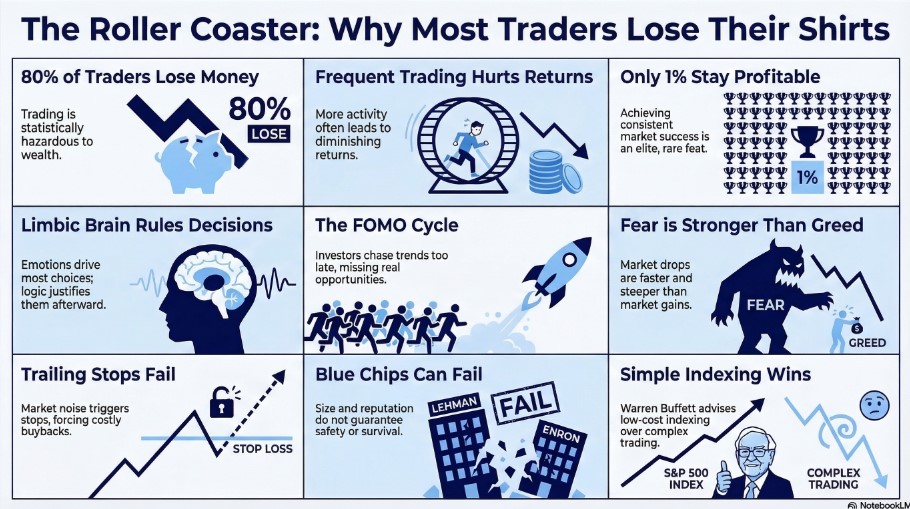
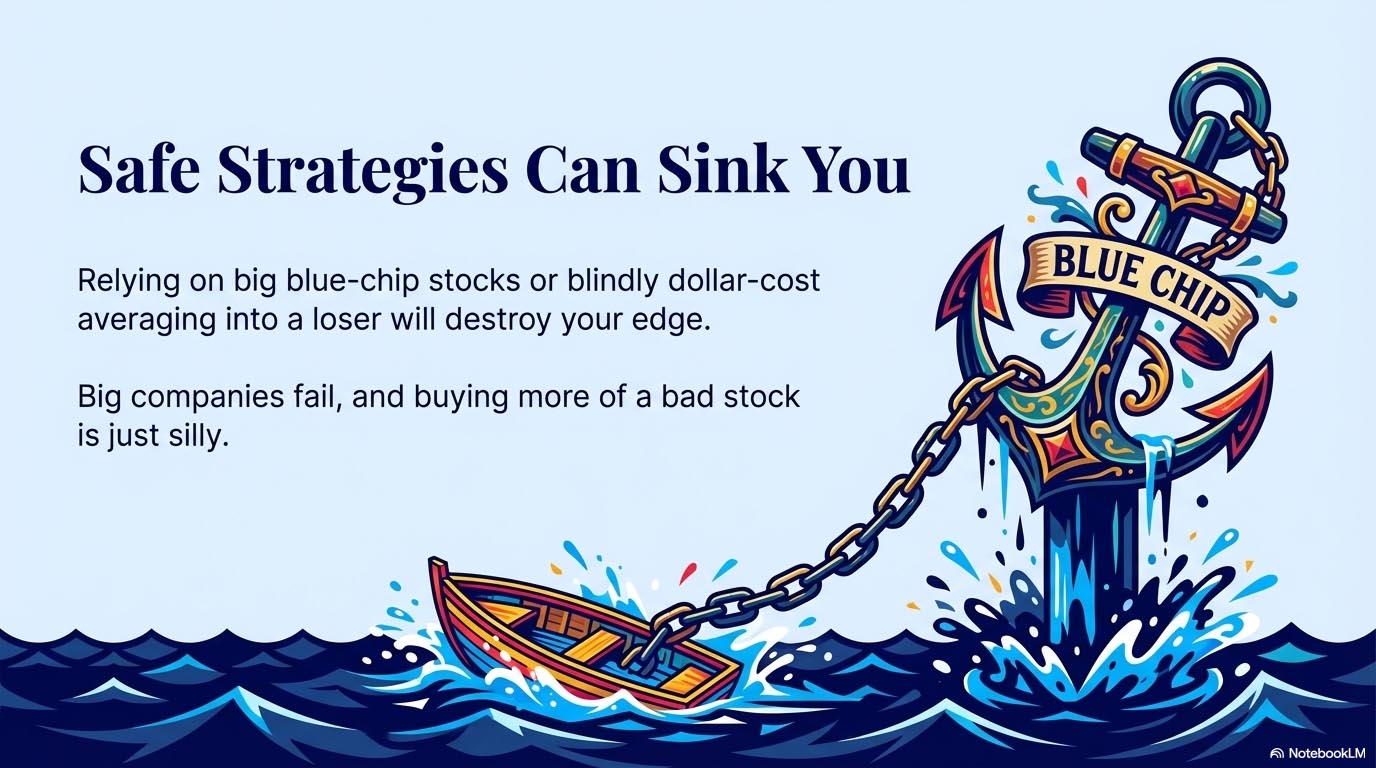
Blue Chips: Large, well-known companies traditionally thought of as “safe” investments. The author notes that “big doesn’t mean safe,” citing failed blue chips like Lehman Brothers and Enron.
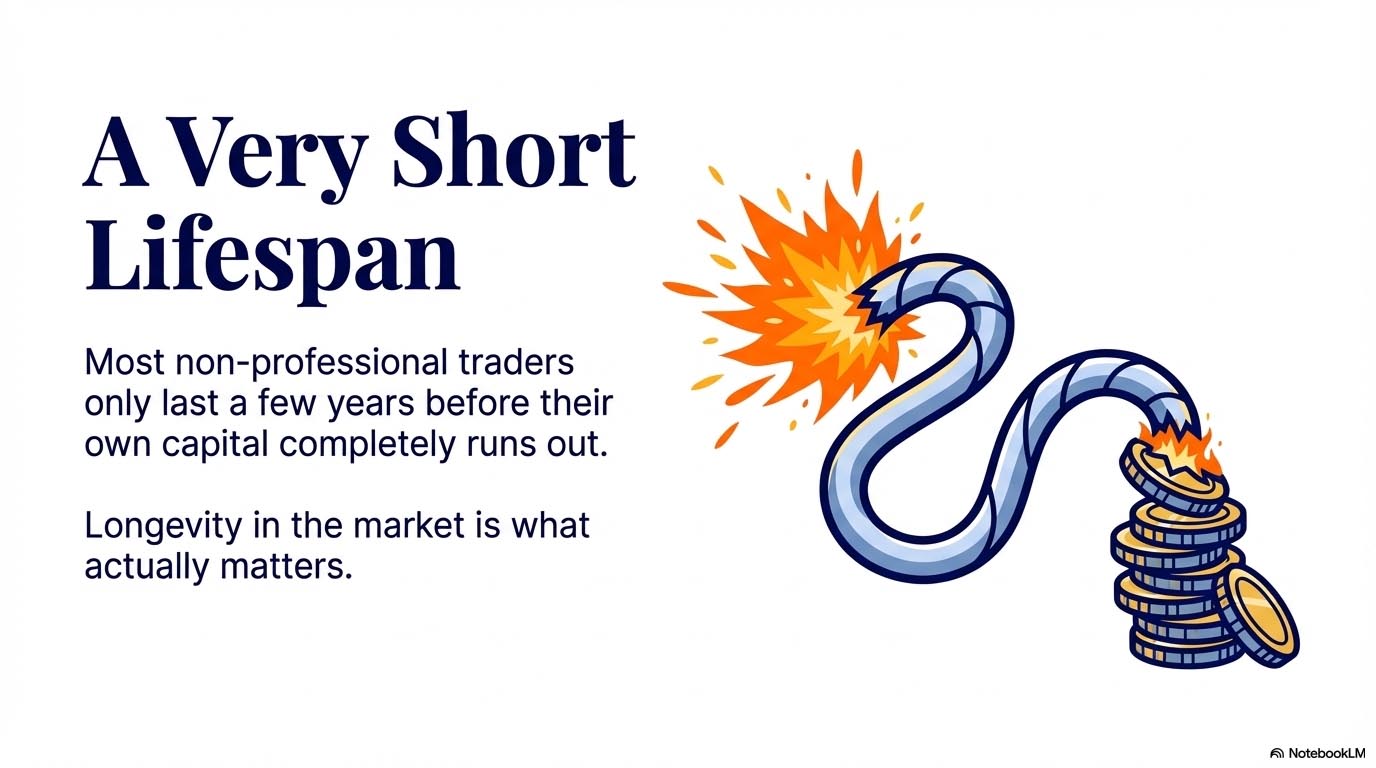
Capitulate: The act of finally cracking and selling off stocks after enduring too much pain from melting capital.
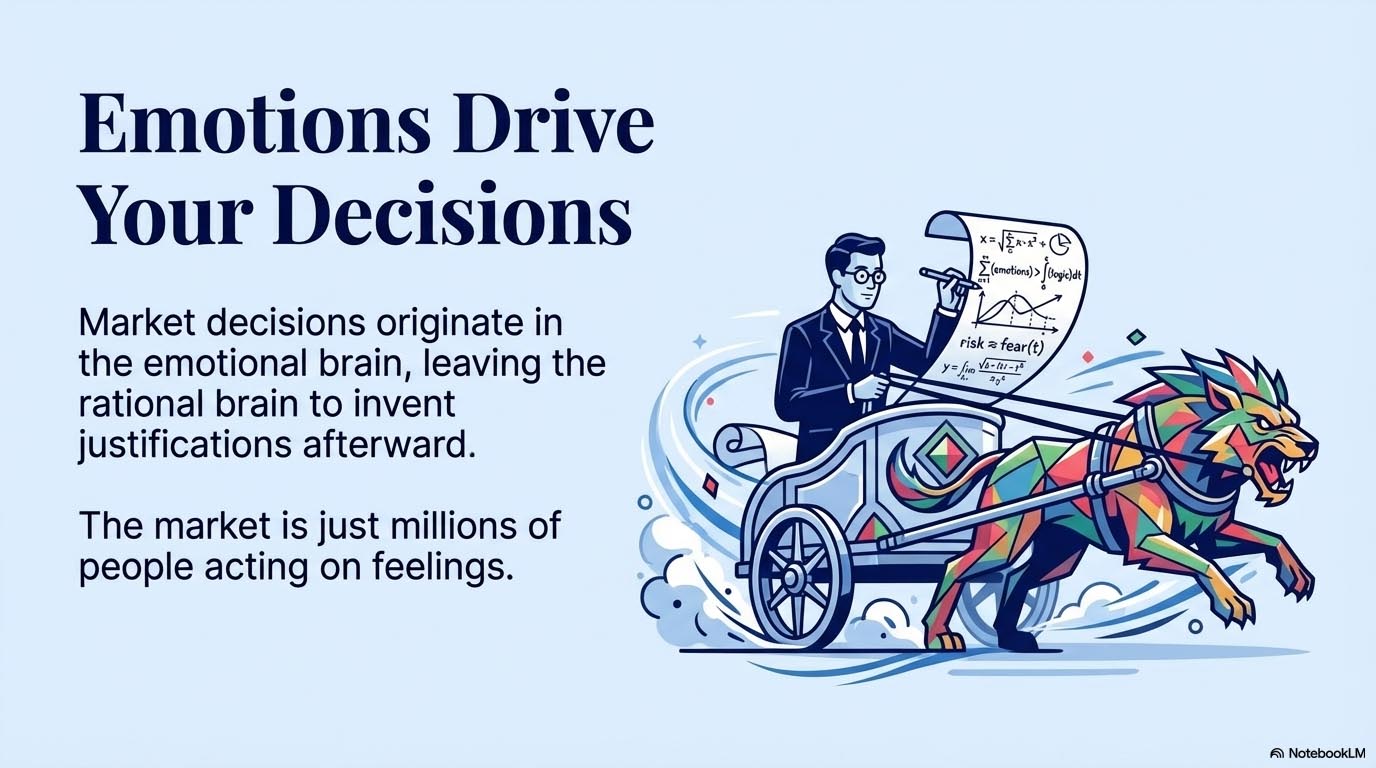
Cerebral Cortex (Rational Brain): The most advanced part of the human brain that handles language, logic, and imagination. It is not in charge when decisions are made, but instead invents reasons to justify decisions already made by the emotional brain.
Confirmation Bias: The tendency to look for and latch onto stories that support your existing beliefs—for example, a discouraged investor feeding their fear by only paying attention to stories of others who lost money.
Dollar Cost Averaging: A discipline of buying the exact same dollar amount of a stock at regular intervals (like every quarter or year), completely regardless of whether the stock’s price is rising or falling.
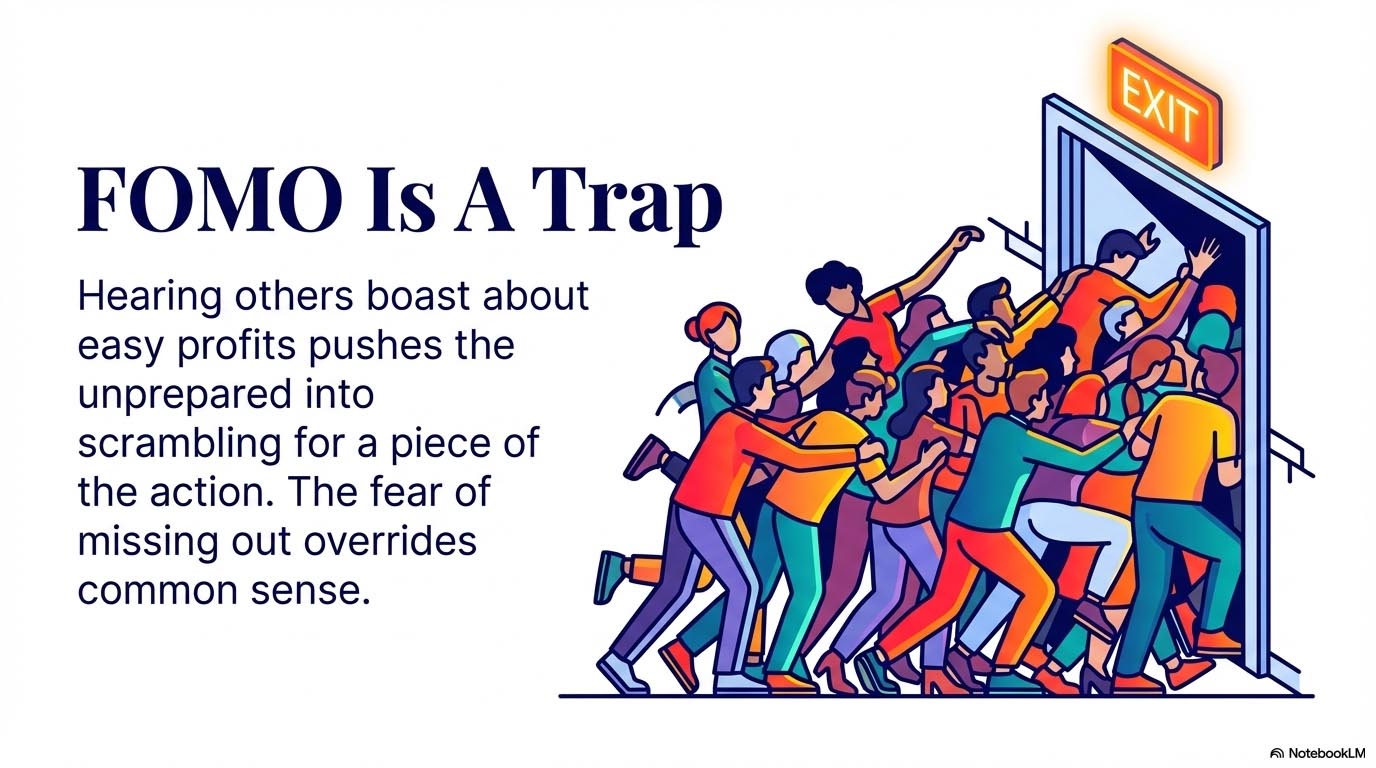
FOMO (Fear Of Missing Out): The anxious feeling that drives people to scramble into the market when they hear stories of friends or “experts” making easy money.
Fundamental Analysis: A method of evaluating stocks based on a company’s financial records.
ITM Strategy: The author’s trading strategy designed to help investors safely “ride the tide” of the market rather than getting wiped out by chasing short-term waves.
Limbic Brain (Emotional Brain): The part of the brain that drives motivation, memory, and emotions (recording what feels good or bad). This is where humans’ financial decisions actually originate.
Mr. Market: A metaphor used by Warren Buffett’s mentor to describe the stock market. Mr. Market is an indifferent “business partner” who offers to buy or sell shares every day at unpredictable prices dictated entirely by his euphoric or depressed moods.
Reptilian Brain: The rigid, uninventive part of the brain responsible for basic survival functions like breathing and heartbeat.
Selling Naked Puts: A high-risk trading strategy mentioned in the text that can lead to rapid, devastating losses during a sudden market drop.
Technical Analysis: A method of evaluating investments based on patterns found in a stock’s chart.
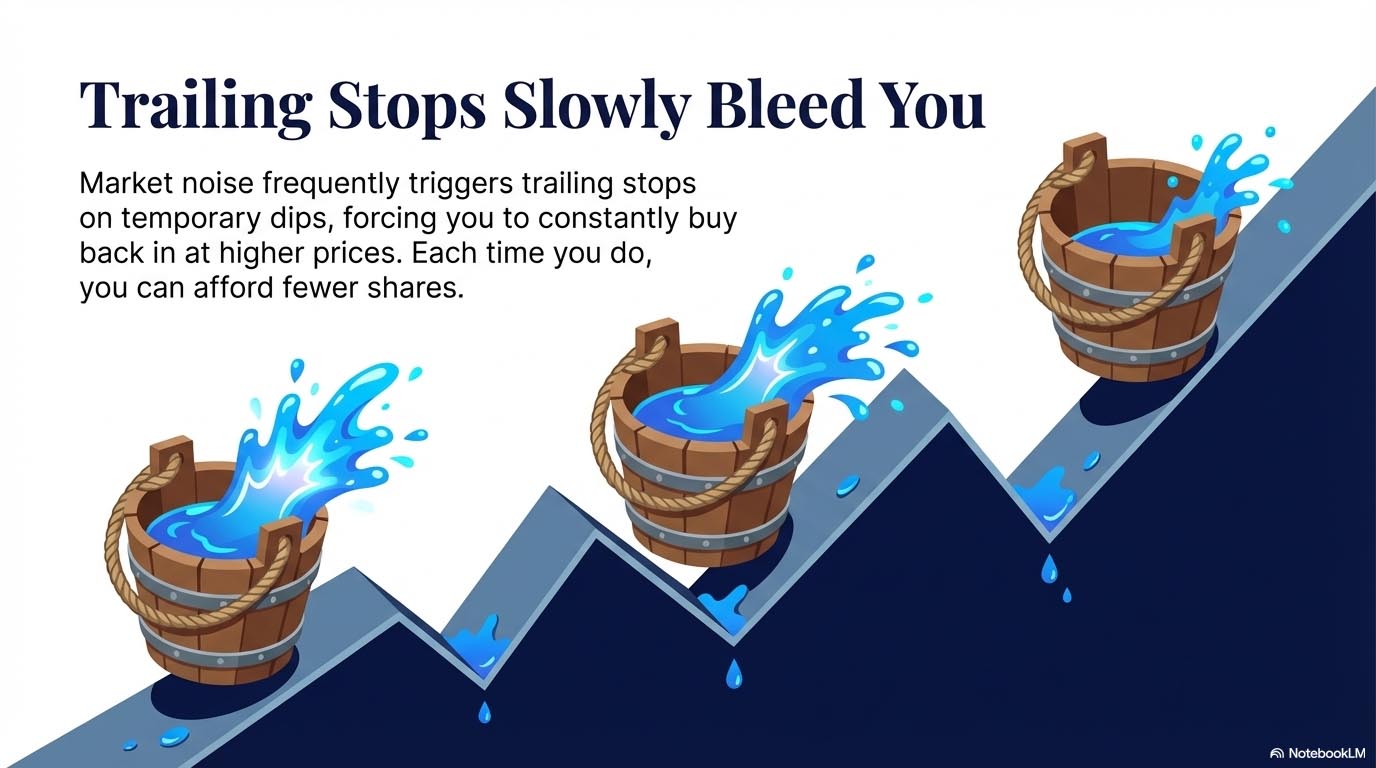
Trailing Stop: A protective trading method where a stop-loss is set at a specific dollar amount below the current stock price. If the stock’s price climbs, the stop-loss price trails up behind it. The author argues this is a poor strategy because typical market “noise” and zigzags frequently trigger the sale prematurely.
Tuition Fees: A term the author uses (borrowed from Reminiscences of a Stock Operator) to reframe money lost in the market as the necessary cost of learning valuable trading lessons.
The Roller Coaster
Loading...
You scored /
Thank you – your message has been sent.
You will be notified when there is a new blog post.
Please note that Heather answers all questions at the end of the ITM Blog.
Happy trading!
We noticed you're visiting from Australia. We've updated our prices to Australian dollar for your shopping convenience. Use United States (US) dollar instead. Dismiss