

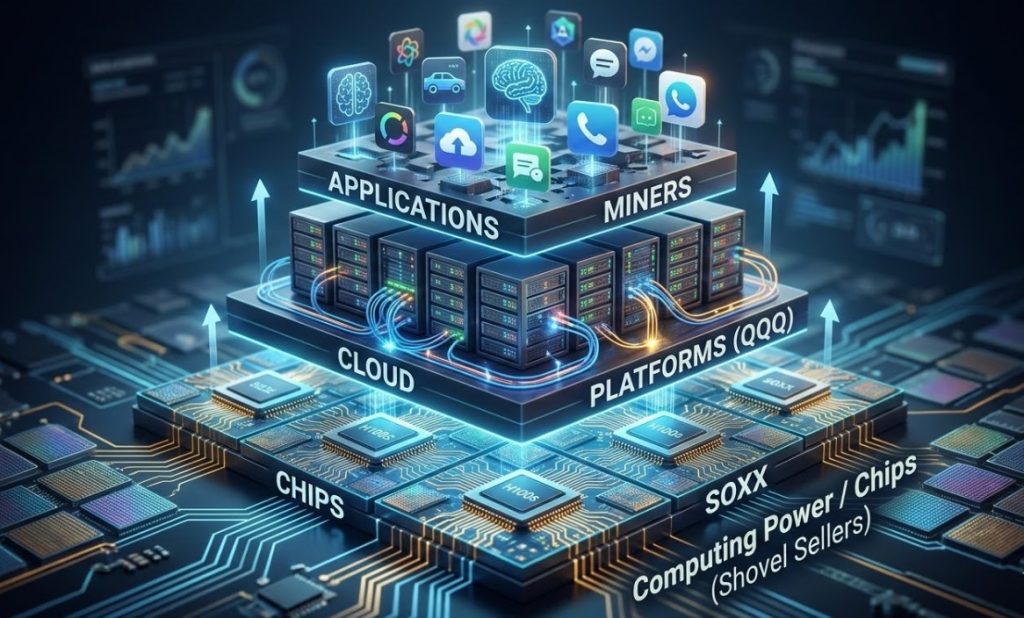
The AI Stack.
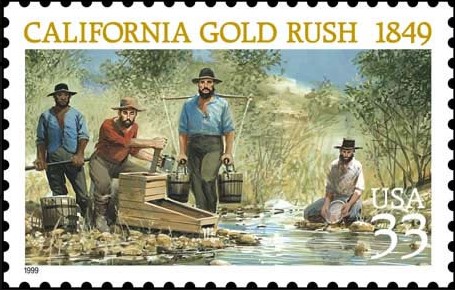
During the California Gold Rush, hundreds of thousands went looking for gold. Very few found it. Most miners made little or nothing. But some people made reliable money: the ones selling the equipment.
Striking Gold
Gold miners needed tough clothing that wouldn’t rip, and Levi Strauss supplied it.
Companies like Collins and Ames manufactured the picks and shovels that every miner needed whether they struck gold or not.
Wells Fargo transported gold, mail and valuables and provided banking services in the rapidly growing mining towns.

The Railroad Boom
Later in the 1800s, investors rushed to build rail lines across America, but many railroad companies eventually collapsed.

The steadier fortunes were made by the suppliers, particularly steel producers. Industrialists like Andrew Carnegie built immense wealth through Carnegie Steel Company by supplying the rails the railroads needed.
The Internet Boom
Hundreds of startups rushed online and many later disappeared when the bubble burst. The companies that consistently made money were often the infrastructure providers, like Cisco and Intel which supplied the networking gear and processors.
The Smartphone Boom
After the launch of the iPhone in 2007, dozens of handset makers rushed into the market and many later disappeared – anyone remember Blackberry? Nokia? Palm? Motorola? Meanwhile firms such as Qualcomm and TSMC prospered by providing the chips that powered the new devices.

The AI Boom
In every technology boom:
- Infrastructure companies make the steady money
- Application companies produce the extreme winners and losers.
The AI Technology Stack
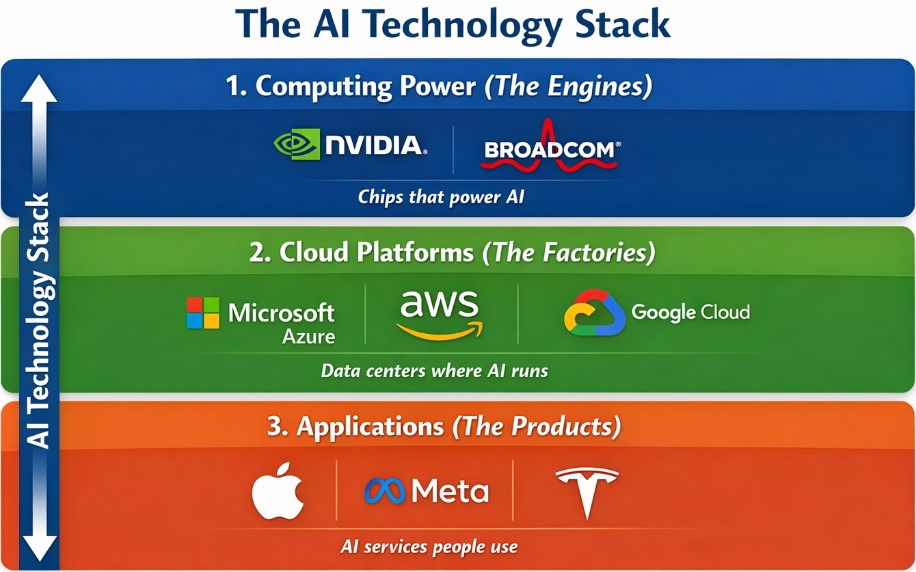
In every gold rush there are miners, railroads and shovel sellers. In the AI economy the miners are the companies building applications, the railroads are the cloud platforms that run them, and the shovel sellers are the companies providing the computing power and chips. When demand for AI rises, the spending flows upward through the stack – from applications to cloud platforms and ultimately to the chip makers.
Extreme Winners & Losers
The application layer is where the extreme winners and losers tend to appear. Just as a few miners struck gold while most went home empty-handed, some application companies will do extremely well while many others will sink without a trace.
Computing Power
The companies that provide the computing power make AI possible. Every AI model must be trained and run on vast numbers of chips, so demand from application developers and cloud platforms ultimately flows to these suppliers. In the AI gold rush, they are the closest equivalent to the shovel makers. As Nvidia’s CEO Jensen Huang put it recently, the AI race now “comes down to compute.”
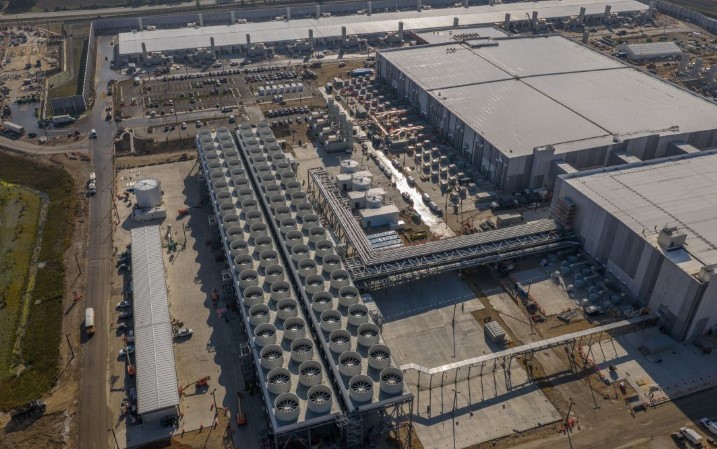
The more powerful the models become, the more processing power they require – which is why the companies supplying the chips and infrastructure may end up being the real winners.
Why QQQ is faltering
As you know, the ITM OUT signal flashed a few weeks ago. While the index is technically holding its ground within its Darvas box, it’s clearly losing its luster. Why? Because QQQ contains companies from every layer of the AI stack: application developers, cloud platforms and the firms providing the computing power.
That also means it will inevitably include some of the future losers, the companies that fail to adapt and eventually disappear.
Index Strength
But the strength of an index is that the winners naturally grow larger while the failures fade away or are replaced. As companies shrink and disappear they become less important in the index. But how long will this take? No-one knows but I suspect this is causing the current malaise.
SOXX – Semiconductor Index
I have been looking for an index that simply contains the computing-power layer of the AI stack. and I think I have found it. The ETF SOXX only contains companies involved in semiconductors and semiconductor equipment. That includes firms that:
- Design chips – NVIDIA, Advanced Micro Devices
- Manufacture chips – Taiwan Semiconductor Manufacturing Company
- Build chip-making machines – ASML, Applied Materials
What it does not include are the other layers:
Cloud platforms: Microsoft / Amazon / Alphabet
Applications: Apple / Meta Platforms / Tesla
Trading the SOXX
But can we trade it? It has a good options market, going out to 2028, with spreads that are not too wide. Should we trade it? That is harder to answer. It is relatively volatile and we don’t have decades of AI-boom data to lean on. It needs more thought, so I will come back to this is a future blog.
To the markets . .
Last week ended on a very sour note. Let’s look at the charts.
SPY Charts
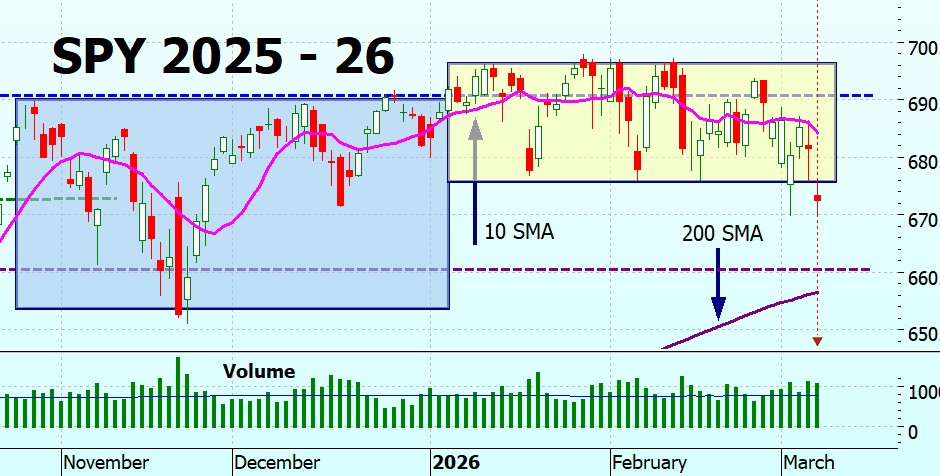
SPY closed at its lowest level since December, below the 676 we were hoping would hold as support. With the 200 SMA now approaching 660 its possible that a death cross may not be too far off. It really depends on what is happening with Iran – that situation combined with fears about AI is making the market very jumpy.
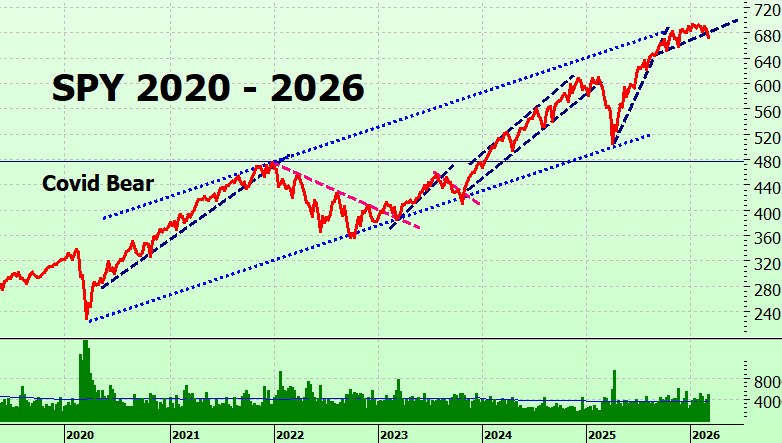
Not good news on the long term chart either – it has dropped through our tentative trend line.
SPYG Charts
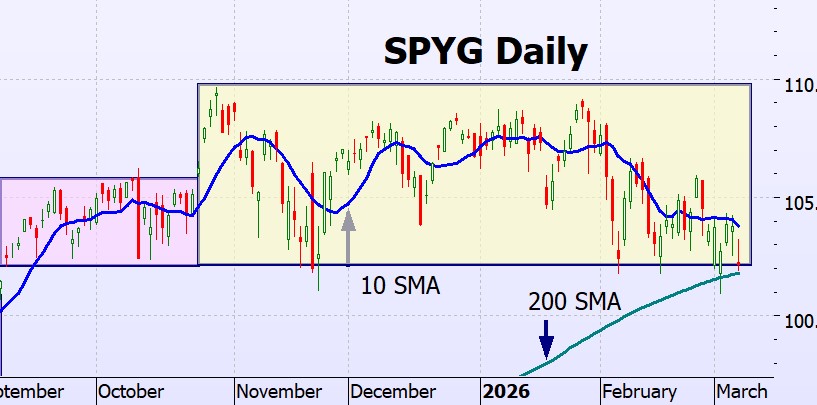
Not looking good. I have zoomed out so that you can see the last 6 months, and we are bumping along the bottom of the Darvas box. Exactly where we were early September. The death cross could happen in the next few days if support at 102 doesn’t hold.
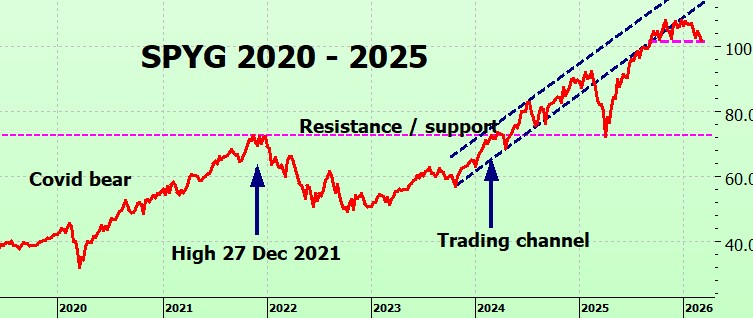
The long term chart isn’t quite so depressing – the pink support line is holding for now.
QQQ Charts
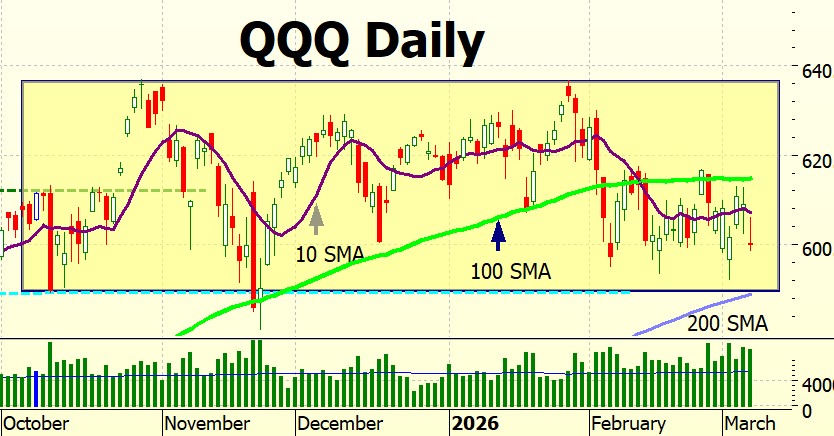
Like SPYG , QQQ is trading right back where it was in September – it just hasn’t moved other than oscillating between the upper and lower bounds of the box. We got the OUT signal some weeks ago, but since then QQQ has been travelling sideways, and since February it has been coiling tighter and tighter. Conventional wisdom says that the tighter it coils the more definite the breakout when it comes. Let’s hope it isn’t downwards – although we are safe on the sidelines it is nicer when the market is going up.
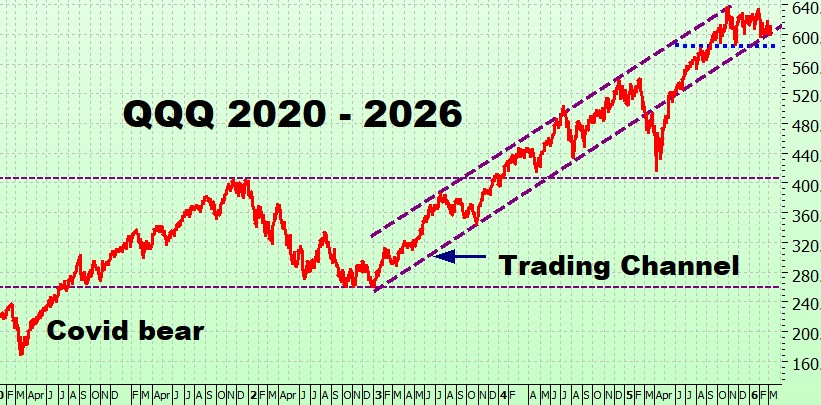
Long term, it isn’t too horrid; the blue support line is holding and it hasn’t definitively dropped out of the trading channel.
VIX Chart (Volatility)
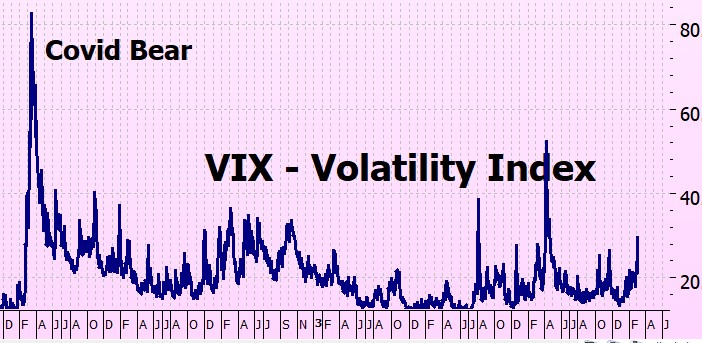
The VIX is having one of its regular conniptions.
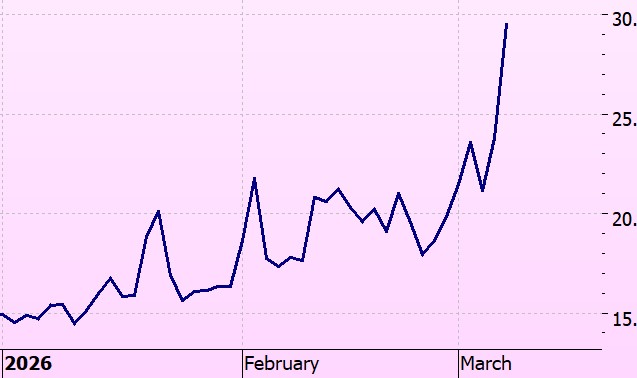
And let’s take a closer look. March has not been nice at all and we are at the highest level since this time last year. Maybe we are seeing a new market trend – an Easter Bump?
ITMeter
SPY

QQQ

The week ahead
Oracle and Adobe both report this week, and provide a neat snapshot of the AI stack. Oracle supplies the infrastructure – the railroads carrying the traffic – while Adobe sits at the application layer, where AI may enhance today’s software … or start replacing it.
Earnings & Announcements
Monday, March 9
• No major economic data scheduled.
• Earnings: Hewlett Packard Enterprise (HPE), Vail Resorts (MTN).
Tuesday, March 10
• Economic Data: NFIB Small Business Optimism Index.
• Earnings: Oracle (ORCL), BioNTech (BNTX), NIO (NIO).
Wednesday, March 11
• Economic Data: Consumer Price Index (CPI) – February inflation report.
• Earnings: Campbell Soup (CPB), UiPath (PATH), Bumble (BMBL).
Thursday, March 12
• Economic Data: Producer Price Index (PPI).
• Earnings: Adobe (ADBE), Dollar General (DG), Ulta Beauty (ULTA).
Friday, March 13
• Economic Data: University of Michigan Consumer Sentiment (Preliminary).
• Earnings: Buckle (BKE).
The futures
Looking absolutely dismal right now – but it is 12 hours to market open. I’m not game to predict what is going to happen, I suspect it will all be about Iran. Will people run for the exits? Or have they already left, and we’ll bottom? Who knows. This week shall be interesting.
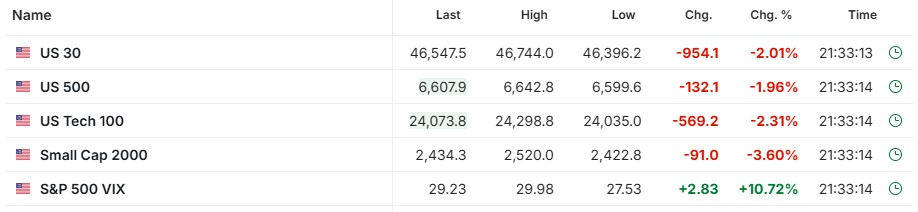
But one good thing this week – daylight saving has started, so the market opens one hour earlier. Good for me here in Western Australia.
Signing off . .
There’s a saying: “May you live in interesting times.” Between AI rewriting the technology industry and a war breaking out in Iran, it’s safe to say we’ve qualified.
Heather
Trade the tide – not the waves
Q & A
Related Posts
- Side Effects of AI
Unintended Consequences of AI. There’s a side effect of the ‘AI Revolution’ that I’ve been…
- NVIDIA & AI
NVIDIA & AI. NVIDIA dominated the market news this week, with its results being reported…
- AI: Hype & Bubble?
AI: Is it all Hype & Bubble? The market went down last week (until Friday),…

























8 Responses
Greetings, Heather!
Two Things:
1) This post mentions there was an OUT SIGNAL for QQQ a few weeks ago. The SMA 10 did cross below the SMA 50, but the 10 is still above the 200. So what did you mean when you said we got the out signal?
2) Will your upcoming book apply to the United States markets or to other markets? And can you tease us with the TITLE of the book?
Thanks!
Steve
HI Stephen
Up until now we haven’t been using ITM on QQQ – I just look at the charts because it is such an important part of the market. In the new book I specifically look at trading the QQQ – all explained inh it – I was just giving a heads up before publication that the new QQQ OUT signal had triggered. I didn’t want anyone to get caught still in a position, then read the new book, then get annoyed because I didn’t warn them about the OUT signal.
It is still on ‘PUT’ which is why the ITMeeter is showing neurtal – neither bull nor bear, which means that we should be on the sidelines.
New book – called In The Money : Bull and Bear Strategy – my ‘swansong’ – and on the US market only SPY / SPYG / QQQ.
Waiting on the final proofs now, they have to come from the US and it takes around 10 days. hopefully later this week or early next week.
h
Hope this helps.
Heather,
What time frame are you using for the 200 day sma for spyg? I’d like to adjust my chart and price alerts to match your discussion.
Steve
Hi Steve – always the daily chart for ITM signals.
Here’s a linke and it has the instructions on it: https://heathercullen.com/stock-charts/
Hope this helps.
h
Dear Heather,
SPYG is still in the price range of the low 100s. Hopefully, it does not go to the 90s price range. Otherwise, the death cross (10ma below 200ma) will occur.
Heather,
Thank you again for great information always with insights and engaging style.
I love reading your blog and I look forward to it every Monday morning.
I am All In with ITM and sharing the simplicity and elegance of it with any who will listen. I sell short calls for income against the long calls, which lately helps to offset the decreased value in SPY options.
Lately, I have been eagerly anticipating news about the release of your latest book.
And, just curious … The Russell 2000 fund, IWM, seems a likely candidate for smaller accounts to implement the ITM strategy. Why don’t you consider IWM?
A thousand blessings,
David A in Florida
Dear Heather,
Thank you for your weekly blogs as always. Speaking of the California Gold Rush in 1849, it increased the San Francisco’s population from 1,000 to 25,000. Humanity is the real gold and in 175 years from 1850 to 2025, San Francisco and San Jose have turned into the Silicon Valley. Your current weekly post of this week about the California Gold Rush suddenly reminds me to be grateful and thankful that I am currently 49 years old and reaching 50 soon at the mid century mark. Cheers to life and cheers to the ITM Community.
Sincerely,
George Henry Robert
Hi Heather
I live in southern California and am lucky enough to be able to read your blog sundry night. I look forward to it every week and have learned so much from you. Your insights are always amazing and the books you have recommended have been a real learning experience for me. I’m 82 and retired so I have to be careful with my investments but have committed a good portion of my portfolio to your DITM strategy.
The article this week was quite interesting and I recently started thinking along the same lines and started investing in SMH, a similar fund to SOXX. It has a better long term track record than SOXX but when I just compared their holdings yours seems to be better diversified. I haven’t compared their options because I don’t want to invest the money it would take to do that. Would be interested in your thoughts.
Ps. If you want a real picks and shovels etf look into AIPO